Mahjong is one of the most beloved tile-based games in the world, played by hundreds of millions of people across Asia and a rapidly growing global community. If you have ever been curious about what mahjong is, how it is played, and why so many people find it captivating, you are in the right place. This guide is your friendly starting point — no prior knowledge required.
- Players: 4 players per game
- Tiles: 108 tiles in 3 suits
- Goal: Be the first to complete a winning hand
- Variant on realmahjong.ai: Sichuan Blood Battle
- Cost: Completely free to play
1. What Is Mahjong?
Mahjong is a tile-based strategy game for 4 players. Think of it like a card game, but played with beautifully crafted tiles instead of cards. The game originated in China during the Qing dynasty (around the 19th century) and has since spread across the entire world, spawning dozens of regional variants.
At its core, every mahjong game follows the same pattern: you are dealt a hand of tiles, you draw new tiles from a central pool, you discard tiles you do not need, and you try to build a specific winning arrangement before your opponents do. It is a game of skill, strategy, memory, and a touch of luck — much like poker, but with tiles.
The standard mahjong set used in Blood Battle contains 108 tiles divided into 3 suits: Wan (Characters), Tiao (Bamboo), and Tong (Circles/Dots). Each suit has ranks 1 through 9, and each tile appears exactly 4 times in the deck (4 copies × 27 unique tiles = 108 total).
| Aspect | Details |
|---|---|
| Players | 4 (fixed) |
| Tiles | 108 tiles, 3 suits |
| Suits | Wan (Characters), Tiao (Bamboo), Tong (Circles) |
| Ranks per suit | 1 through 9 |
| Copies per tile | 4 |
| Win condition | 4 sets + 1 pair (14 tiles) |
Unlike many Western card games where one player wins and everyone else loses in a single round, mahjong is played over multiple rounds with each player having multiple opportunities to win. This creates a rich back-and-forth dynamic where fortunes can shift dramatically.
2. Why Play Mahjong Online?
Traditionally, mahjong required four people to gather around a table with a physical tile set — not always easy to arrange. Playing online removes every barrier. On realmahjong.ai you can:
- Play instantly — no download, no tile set, no friends required (the game matches you with other players or AI opponents)
- Learn at your own pace — in-game hints guide you through every decision, from the exchange phase to choosing what to discard
- Join a global community — connect with English-speaking players from around the world who share your curiosity about mahjong
- Play for free — all coins are earned through gameplay; there is no pay-to-win element
- Track your progress — see your win rate, average score, and improvement over time
3. What Makes Blood Battle Mahjong Special?
There are dozens of regional mahjong variants — Cantonese, Japanese (Riichi), Taiwanese, and more. realmahjong.ai features Sichuan Blood Battle Mahjong , one of the most popular variants in China. It has several unique rules that set it apart from every other variant and make it especially exciting for new players to learn.
No Chi (No Sequence Stealing)
In many mahjong variants, you can "steal" a tile that another player discards to complete a sequence in your hand (called "Chi" or "Chow"). In Blood Battle, Chi is not allowed. Every tile in your sequences must be drawn from the wall. This means you must build your hand more independently — which actually makes the game easier to learn, since you do not need to track complex stealing rules.
The Void Suit Rule (Que Men)
Before play begins, every player must declare one suit as their void suit — a suit they commit to not using in their winning hand. This forces strategic planning from the very first moment. Choose wisely: if you are holding void suit tiles at the end of the game, you may face a penalty known as the "Flower Pig."
The Tile Exchange
At the start of each round, every player passes 3 tiles of the same suit to another player. This creates an exciting moment of uncertainty and opportunity — you might receive exactly the tiles you need, or you might need to adapt your plan entirely.
Blood Battle Continues After Someone Wins
This is the defining feature of the game and the origin of its name. In most mahjong games, the round ends the moment one player wins. In Blood Battle, the game continues. The winning player steps out, and the remaining players keep playing until a second and third player also win, or the tile wall runs out. One round can produce up to 3 winners.
This rule creates incredible tension. Even if someone wins before you, you are still fighting to win your own points — and the last player standing who never won has to pay everyone else.
4. The 3 Tile Suits
Blood Battle uses exactly 108 tiles in 3 suits. There are no wind tiles, no dragon tiles, and no flower tiles — just the three pure number suits. Here is a quick preview of each:
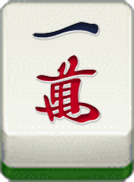
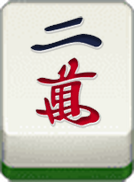
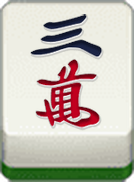
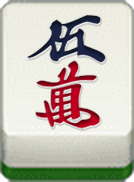
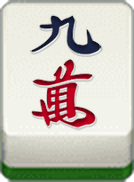
Wan — Characters
Wan tiles display Chinese characters for numbers. They are the most visually recognizable suit for newcomers because the large Chinese numeral is clearly visible in the center.
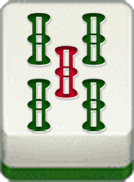
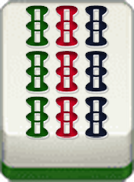
Tiao — Bamboo
Tiao tiles show bamboo sticks arranged in patterns. The number of bamboo sticks represents the rank.



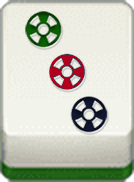
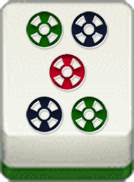
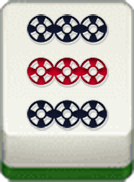
Tong — Circles / Dots
Tong tiles display circular dot patterns. Count the circles to identify the rank.


5. Your Goal: Win Hands, Earn Coins
The goal of each round is to build a complete winning hand before your opponents do (or at least before the tile wall runs out). A standard winning hand consists of:
- 4 sets — each set is either a sequence (3 consecutive tiles of the same suit) or a triplet (3 identical tiles)
- 1 pair — two identical tiles that act as the "eyes" of your hand
- No void suit tiles — your hand must contain zero tiles from your declared void suit
When you win, other players pay you coins based on the fan value of your hand. A basic winning hand earns a baseline amount. Special patterns — like all tiles from one suit (Clear Hand), all triplets, or seven pairs — multiply your earnings. The more skillfully you build your hand, the more you earn.
On realmahjong.ai, all coins are earned through gameplay and used purely for in-game stakes. The game is completely free — there is nothing to purchase.
6. What You Will Learn in These Guides
This guide series is designed to take you from "I have never played mahjong" to "I understand every rule and I am developing real strategy." Here is the full roadmap:
| Guide | What You Will Learn |
|---|---|
| 1. What Is Mahjong? (this guide) | Origins, overview, what makes Blood Battle unique, the 3 suits |
| 2. Mahjong Tiles Explained | Reading every tile, suits and ranks, terminals vs. simples, how sets are formed |
| 3. How to Play Mahjong | Complete game flow: deal → exchange → void → draw/discard → win → scoring |
| 4. The Tile Exchange | Strategy for passing 3 tiles: what to keep, what to pass, common mistakes |
| 5. The Void Suit Rule | Choosing your void suit, the Flower Pig penalty, advanced strategy |
- Mahjong
- A tile-based strategy game for 4 players, originating in China. Players draw and discard tiles to build a winning hand.
- Blood Battle
- The Sichuan variant of mahjong. Unique rules: no Chi, void suit declaration, tile exchange, and the game continues after someone wins.
- Suit
- One of the three tile categories: Wan (Characters), Tiao (Bamboo), or Tong (Circles).
- Set
- A group of 3 tiles that form a valid combination — either a sequence or a triplet.
- Sequence
- Three consecutive tiles of the same suit, e.g. 3-4-5 Wan.
- Triplet
- Three identical tiles, e.g. three 7 Tiao tiles.
- Pair
- Two identical tiles. Every winning hand needs exactly one pair.
- Void Suit
- The suit you declare at the start of each round. You cannot include void suit tiles in your winning hand.
- Flower Pig
- A penalty status: you are holding void suit tiles when the game ends without a full winner. You must pay every waiting player.
- Fan
- Scoring units in mahjong. Each special pattern in your winning hand adds fan. Earnings double for each fan.