Knowing the rules is just step one. To actually win at Sichuan Blood Battle Mahjong, you need to recognize what a valid winning hand looks like — and just as importantly, what it does not look like. This guide walks through every legal winning structure, all five tenpai waiting patterns, and the fan bonuses that multiply your payout.
- 108 tiles total: 3 suits (Wan, Tiao, Tong), ranks 1–9, 4 copies each
- No honor tiles — no winds, no dragons, no flower tiles
- No Chi — you cannot claim discards to form sequences
- You must eliminate your void suit before you can win
- Multiple players can win in the same round (Blood Battle rule)
1. The Two Types of Winning Hands
Blood Battle Mahjong has exactly two legal winning hand structures:
| Type | Structure | Fan Value | Notes |
|---|---|---|---|
| Standard Hand | 4 sets + 1 pair (14 tiles) | 1+ fan depending on patterns | Most common winning structure |
| Seven Pairs | 7 pairs, no sets (14 tiles) | 2 fan base | No exposed melds allowed |
Every valid winning hand is one of these two. No other structure — no matter how many tiles you have or how they are arranged — constitutes a legal win.
2. Type 1: The Standard Hand (4 Sets + 1 Pair)
The most common winning structure is 4 sets plus 1 pair, totaling 14 tiles. The pair is called the "eye" (jiàng). The 4 sets can be any mix of sequences and triplets.
What Is a Set ?
A set is a group of exactly 3 tiles forming one of two valid patterns:
Sequence (shùnzi) — Three consecutive same-suit tiles
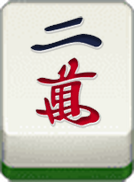
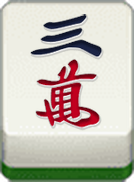
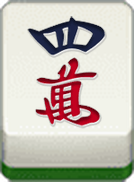
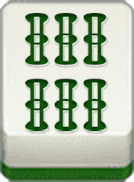
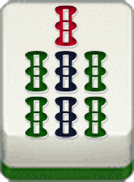
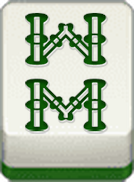


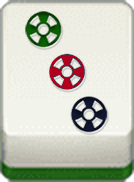
Triplet (kèzi) — Three identical tiles
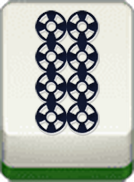
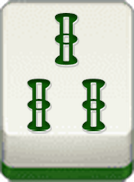
Triplets can be formed naturally in your hand, or by using Pong to claim a discard. If you have all 4 copies, you can declare a Kong instead of a Pong for bonus payments.
3. Five Complete Standard Winning Hands
Here are five complete valid winning hands with different structures and fan patterns:
Example 1: Ping Hu — All Sequences, 1 Fan
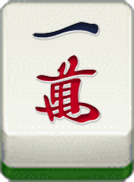
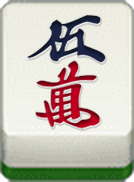
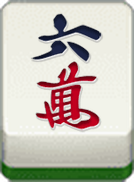
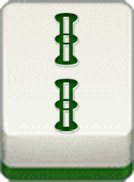
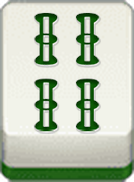
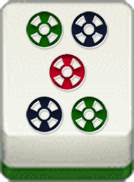
Ping Hu : all 4 sets are sequences, worth 1 fan. The most common and fastest hand to build. Note: void suit is tong here (using only 2 tong tiles as the pair, which is not void). If tong is your void suit, the pair must come from wan or tiao instead.
Example 2: Peng Peng Hu — All Triplets, 2 Fan
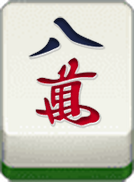
Peng Peng Hu : all 4 sets are triplets, worth 2 fan. Harder to build (requires drawing or ponging many matching tiles) but doubles the payout.
Example 3: Mixed Sequences and Triplets
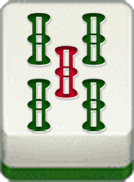
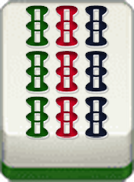
A standard 1-fan hand mixing sequences and triplets. The void suit here would be tong. Most Blood Battle hands end up as mixed structure — flexible and fast to build.
Example 4: Qing Yi Se — Pure Suit, 4 Fan

Qing Yi Se : all 14 tiles (including the pair) are the same suit. Worth 4 fan — the highest single-pattern bonus available. With 4 fan, each opponent pays 16× the base rate. This hand requires voiding both other suits and concentrating entirely on one suit.
Example 5: Another Qing Yi Se in Wan
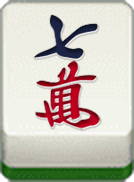
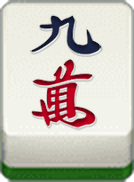
Same 4-fan pattern but in wan suit. Notice the mix of triplets and sequences — Pure Suit does not require all sequences or all triplets. The defining feature is all same suit.
4. Type 2: Seven Pairs (qī duì)
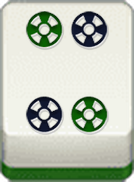
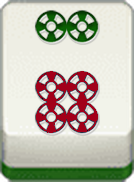
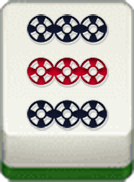
The only alternative structure is Seven Pairs: all 14 tiles form 7 distinct pairs. There are no sets at all. This hand is worth 2 fan.
Each pair must consist of 2 identical tiles. You cannot use a triplet (3 identical tiles) as 1.5 pairs — each pair must be exactly 2 tiles. This means 14 tiles in 7 pairs of 2.
Long Seven Pairs — Same Suit, 4 Fan
5. When to Aim for Seven Pairs
Seven Pairs is a rare but powerful hand. Aim for it when:
- You have drawn 4-5 pairs naturally in the first few turns with no Pongs declared
- Your hand is not forming clean sequences or triplets
- You need 2 fan for a more valuable win and your standard hand would only give 1 fan
- You are in the mid-game and only need 1-2 more pairs to complete 7
The risk: Seven Pairs is a slow hand. Each pair requires 2 specific identical tiles, and you cannot Pong to speed things up. Use it when your draw luck has already given you the majority of the pairs you need.
6. The Void Suit Requirement
Regardless of which winning structure you use, the void suit rule applies:
7. Self-Draw vs. Discard Win
| Method | Chinese | How It Happens | Who Pays | Fan Bonus |
|---|---|---|---|---|
| Self-Draw | (zì mō) | You draw the winning tile from the wall | All active players each pay you | +1 fan |
| Discard Win | (diǎn pào) | Another player discards your winning tile | Only the discarder pays you | No bonus |
Self-draw is dramatically more valuable. With 3 active opponents, you collect three separate payments instead of one. Always build hands that can self-draw where possible — the +1 fan bonus from self-draw doubles your total payout on a 1-fan hand.
8. Tenpai: One Tile Away from Winning
Tenpai (tīng pái) means your hand is one tile away from being complete. This state matters even if you never draw your winning tile — in Blood Battle, tenpai players receive payment from the Flower Pig if the round ends without a winner.
There are five tenpai waiting patterns in Blood Battle. Understanding each is essential because some waits are stronger than others (more tiles that can complete them).
Wait 1: Two-Sided Wait (liǎng miàn tīng)
You hold two consecutive tiles and wait for either end of a sequence. This is the strongest wait because two different tiles can complete it.
Drawing either a 3-wan or a 6-wan completes the sequence. Two-sided waits are the most efficient — aim for them whenever building sequence-heavy hands.
Wait 2: Edge Wait (biān zhāng tīng)
You hold 1-2 of a suit and wait for 3, or you hold 8-9 and wait for 7. Only one tile can complete it — the sequence cannot extend in the other direction past 1 or 9.
Edge waits are weaker than two-sided waits because only one specific tile completes them. Restructure your hand away from edge waits when possible.
Wait 3: Closed Wait (qiàn zhāng tīng)
You hold two tiles with a gap in the middle and wait for the middle tile.
Like edge waits, closed waits have only one completing tile. They occur most often in the mid-game when you are trying to fill a specific gap.
Wait 4: Single Tile Wait (dān diào jiàng)
Your 4 sets are complete but your pair (eye) is incomplete — you hold just one tile and wait for a second copy to form the pair.
Single tile waits require one specific tile — 4 copies exist in the deck, but some may already be discarded or held by opponents. Check the discard pile before committing to this wait.
Wait 5: Double Pair Wait (shuāng pèng tīng)
You hold two pairs and are waiting for one of them to become a triplet (which then functions as a set, leaving the other pair as the eye).
Double pair waits are powerful because two different tiles can complete them — drawing or claiming either the 3rd wan or the 3rd tiao wins. Note that Pong works here: if someone discards a matching tile, you can Pong to complete the triplet and win.
9. Why Tenpai Matters Even Without Winning
Blood Battle does not end when the first player wins. The game continues until the wall runs out or all players have won or paid out. Tenpai players who never win still benefit:
- Tenpai players receive payment from the Flower Pig (the player who held void suit tiles when the wall ran out)
- Being in tenpai proves you were playing efficiently — it matters for morale and future strategy
- Some game modes give additional tenpai bonuses at round end
Get to tenpai as fast as possible, every round. Even if you do not draw your winning tile, tenpai status is never wasted.
10. Fan Scoring Summary
| Hand Pattern | Chinese | Fan Value | Payout Multiplier |
|---|---|---|---|
| Ping Hu (All Sequences) | 1 fan | 2× base | |
| Peng Peng Hu (All Triplets) | 2 fan | 4× base | |
| Seven Pairs | 2 fan | 4× base | |
| Qing Yi Se (Pure Suit) | 4 fan | 16× base | |
| Long Seven Pairs (Pure Suit + 7 Pairs) | 4 fan | 16× base | |
| Self-Draw bonus | +1 fan | doubles payout |
Glossary
- Set (miànzi)
- A group of 3 tiles forming a sequence or triplet. Every standard winning hand needs exactly 4 sets.
- Sequence (shùnzi)
- Three consecutive tiles of the same suit: e.g., 3-4-5 wan.
- Triplet (kèzi)
- Three identical tiles: e.g., 7-7-7 tong.
- Pair / Eye (jiàng)
- Two identical tiles that form the 'eye' of a standard winning hand. Exactly one required.
- Tenpai (tīng pái)
- The state of being one tile away from completing your hand. Tenpai players receive payment from the Flower Pig.
- Ping Hu
- All four sets are sequences. Worth 1 fan.
- Peng Peng Hu
- All four sets are triplets. Worth 2 fan.
- Seven Pairs (qī duì)
- Seven pairs of identical tiles, no sets. Worth 2 fan. No exposed melds allowed.
- Qing Yi Se
- All 14 tiles (sets and pair) are the same suit. Worth 4 fan.
- Long Seven Pairs
- Seven pairs all in the same suit. Combines 7 Pairs and Pure Suit for 4 fan total.
- Self-Draw (zì mō)
- Winning by drawing your own winning tile from the wall. Grants +1 fan; all active players pay.
- Discard Win (diǎn pào)
- Winning when another player discards your winning tile. Only the discarder pays.
- Void Suit (dìng quē)
- The suit you declare at round start that cannot appear in your winning hand.
- Flower Pig (huā zhū)
- A player who holds void suit tiles when the wall runs out. Must pay all tenpai players.