Of all the rules in Blood Battle Mahjong, the void suit rule (dìng quē — literally "declare the missing suit") is the one that has the biggest impact on how a round is played. It is the commitment that shapes every discard you make, every tile you chase, and every risk you take. Getting your void suit right is the difference between winning comfortably and scrambling to avoid a disastrous penalty.
- What the void suit rule is and exactly how it works
- Why the rule exists and why it makes the game better
- How to choose your void suit step by step
- The cost of getting it wrong — and the Flower Pig penalty
- How the tile exchange changes your void suit choice
- Advanced: how your void suit signals information to opponents
- Full explanation of the Flower Pig outcome
1. What Is the Void Suit Rule?
After the tile exchange and before the main draw/discard phase begins, every player must declare one of the three suits as their void suit. Once declared, this choice is final for the entire round.
| Rule | Detail |
|---|---|
| When do you declare? | After the tile exchange, before the first draw/discard |
| What do you declare? | One of three suits: Wan, Tiao, or Tong |
| Can you change it? | No — the choice is locked for the rest of the round |
| What does it mean for winning? | Your winning hand must contain zero tiles from your void suit |
| Can you hold void tiles? | Yes, but you must discard them all before you can win |
| What if you hold void tiles at round end? | Flower Pig penalty — pay every waiting player |
To be completely clear: you are not prohibited from drawing void suit tiles. You will inevitably draw some during the round. You just cannot win while holding any. Before you can declare a win, your hand must be completely clear of your declared void suit.
2. Why This Rule Exists
The void suit rule serves several important design purposes that make Blood Battle Mahjong a richer game than most variants:
It Forces Strategic Commitment
Without the void rule, every player could build their hand opportunistically — taking whatever sequence or triplet possibilities arise across all three suits without making any commitments. The void rule forces every player to commit to a plan early. This commitment creates tension and decision pressure that makes the game engaging throughout.
It Creates Information
Your void suit becomes visible to opponents over time through your discard patterns — you will never discard to keep void suit tiles (since you are trying to get rid of them). Experienced players track what others discard and infer their void suits, which adds a layer of deduction and bluffing to the game.
It Speeds Up Play
By restricting each player to two effective suits, hands tend to form faster. Without the void rule, players might chase marginal tiles across all three suits indefinitely. The void rule keeps everyone focused and rounds shorter.
It Creates High-Stakes Outcomes
The Flower Pig penalty — awarded when you still hold void tiles at round end — creates a real cost for poor void suit management. This high-stakes outcome keeps players paying attention even when they are far from winning.
3. How to Choose Your Void Suit
After the tile exchange, take a moment to count your tiles by suit. Here is the decision framework:
- Count your tiles by suit. After receiving exchange tiles, sort your hand: count Wan, Tiao, and Tong separately.
- Identify the suit with fewest tiles. Fewer tiles = easier to clear = better void candidate. This is your starting choice.
- Check the quality of those tiles. Are they isolated (no adjacent neighbors)? Voiding is easy. Are they part of an almost-complete sequence? Maybe reconsider.
- Verify your winning path in the remaining two suits. After voiding, can you build a complete winning hand from only the other two suits? If yes, confirm your void choice.
- Declare your void suit and start discarding void tiles immediately. Do not wait. Every early discard you make should prioritize clearing the void suit.
Example: Clear-Cut Void Choice
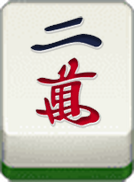
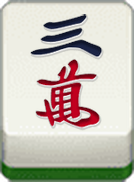
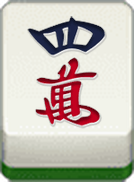
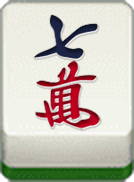
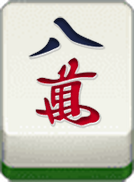
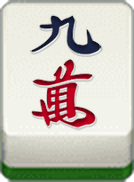

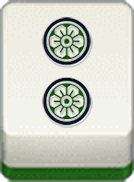
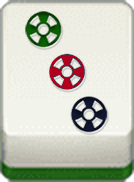
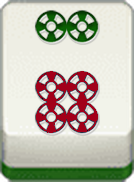
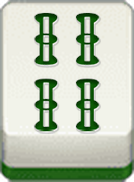
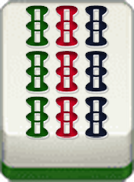
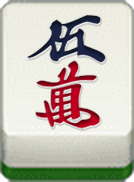
This hand has 7 Wan tiles (two complete sequences), 5 Tong tiles (one complete sequence plus one pair), and only 2 Tiao tiles — both isolated (4 Tiao and 9 Tiao, no adjacent neighbors). Void = Tiao. Discard the 4 Tiao and 9 Tiao as your first two discards.
Example: Harder Void Choice
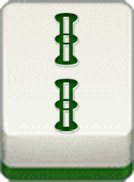
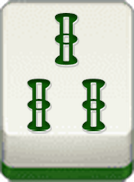
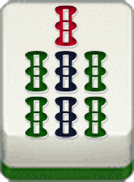
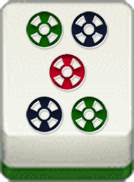
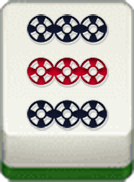
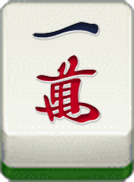
All three suits have 3–5 tiles. But structure is what matters: Wan has a complete 3-4-5 sequence plus isolated terminals (1 and 8). Tiao has a complete 2-3-4 sequence plus a pair of 7 Tiao. Tong has three completely isolated tiles (1, 5, 9 — no adjacent neighbors between them).
Best void choice: Tong. The 3 Tong tiles are all dead weight with no sequence potential. Voiding Wan would break the 3-4-5 sequence. Voiding Tiao would break the 2-3-4 sequence and lose the 7-7 pair. Tong is clearly weakest structurally.
4. The Cost of Getting It Wrong
Choosing the wrong void suit — or failing to clear your void suit tiles quickly enough — has two distinct costs:
Cost 1: You Cannot Win When You Should
If you have completed your 4 sets and 1 pair, but you are still holding a void suit tile, you cannot declare victory. Your winning tile might come and go while you are blocked by one unwanted void tile. Every turn you spend waiting to discard a void tile is a turn your opponents have to win first.
Cost 2: The Flower Pig
If the tile wall runs out before you have won, and you are still holding any void suit tiles, you become a Flower Pig. The Flower Pig outcome is one of the harshest penalties in the game:
- Every player who is in tenpai (one tile away from winning) collects a penalty payment from you
- The penalty amount equals their maximum-fan winning payout at that point
- Multiple tenpai players all collect from you simultaneously
- A single Flower Pig outcome can cost more than winning 5 normal hands earns
5. Void Suit After the Exchange
Here is a common scenario: you had a clear void suit plan before the exchange, then you received 3 tiles that changed your hand completely. What do you do?
Always reassess your void choice after receiving exchange tiles. Your pre-exchange void plan is just a starting point. The 3 tiles you receive might:
- Be from your intended void suit — bad luck, now you have even more void tiles to clear
- Complete a sequence in a suit you wanted to keep — that suit is now stronger; confirm your void choice
- Make a different suit the better void candidate — pivot without hesitation
Pivot Example
Before exchange: You had 2 Tiao, 5 Wan, 6 Tong. You planned to void Tiao. You passed 3 Wan tiles (to strengthen Tiao further). You received: 3 Tiao tiles back (bad luck). Now you have 5 Tiao, 2 Wan, 6 Tong.
New optimal void: Wan — you only have 2 left, and Tiao is now your strongest suit. Pivot immediately. Do not hold onto your original plan just because you had it before the exchange.
6. Advanced: Your Void Suit Signals Information to Opponents
As the round progresses, your discards reveal your void suit to observant opponents. Once you have cleared your void tiles, you will never discard that suit again — because you no longer hold any. Opponents who track discards can notice this pattern.
What this means in practice:
- Opponents can identify your void suit roughly 3–5 turns into play by noticing you stop discarding from a suit entirely
- Once they infer your void, they know tiles from that suit are safe to discard — you cannot win using them
- Tiles from your active suits (non-void) become more dangerous for them to discard
As an advanced player, you can occasionally hold a void tile one extra turn before discarding it to obscure your void suit from opponents. However, this is a high-risk tactic — every extra turn you hold a void tile increases your Flower Pig exposure. Reserve this bluff only for situations where you are very close to tenpai and the information concealment is worth the risk.
7. What Is a "Flower Pig"?
The term "Flower Pig" (huā zhū) is the colorful name for any player who holds void suit tiles when the round ends without a full winner — meaning the tile wall runs out with fewer than 3 players having won. It is one of the most memorable and painful outcomes in Blood Battle Mahjong.
Step-by-Step Flower Pig Settlement
- The tile wall runs out — the round ends in a draw
- Each player reveals whether they are in tenpai (one tile from winning) or not
- Players still holding void suit tiles are declared Flower Pigs
- Each Flower Pig pays every tenpai player: Base Score × 2^(that player's maximum fan count)
- Standard end-of-wall rules also apply: non-tenpai players pay tenpai players regardless of Flower Pig status. Flower Pig is an additional, separate payment on top.
The Four Possible End-of-Wall Outcomes
| Your Status | Outcome |
|---|---|
| Tenpai, no void tiles | Collect from non-tenpai players — best case |
| Not tenpai, no void tiles | Pay each tenpai player their max-fan amount |
| Tenpai, with void tiles (Flower Pig) | Collect nothing AND pay each tenpai player their max-fan amount |
| Not tenpai, with void tiles (Flower Pig) | Pay each tenpai player twice: standard penalty + Flower Pig penalty — worst case |
The most devastating outcome is being a non-tenpai Flower Pig: you pay every tenpai player twice — once as a standard non-tenpai player and once as a Flower Pig. Effectively double punishment with nothing in return.
- Void Suit (dìng quē)
- The suit you declare before play begins, committing to exclude all tiles of that suit from your winning hand.
- Flower Pig (huā zhū)
- The penalty status for holding void suit tiles when the round ends without a full winner. You pay every tenpai player the full penalty amount.
- Tenpai (tīng pái)
- Being exactly one tile away from a complete winning hand. Players in tenpai collect from non-tenpai players at end-of-wall.
- End-of-Wall / Draw (liú jú)
- A round that ends because the tile wall ran out with fewer than 3 winners. Triggers tenpai checking and Flower Pig assessment.
- Discard Pattern
- The tiles you have discarded face-up on the table, visible to all opponents. Experienced players use your discard pattern to infer your void suit and hand shape.
- Pivot
- Changing your intended void suit after seeing the tiles you received in the exchange. Always valid — the void suit is not declared until after the exchange completes.
- Structure
- How well your tiles connect to form sequences and triplets. A suit with good structure (complete sequences, pairs) is worth keeping. A suit with poor structure (isolated tiles) is a good void candidate.