The tile exchange (huàn sān zhāng — literally "exchange three tiles") is the first major decision you make in every round of Blood Battle Mahjong. It happens before any tile is drawn or discarded, and the choice you make here shapes the rest of the entire round. A smart exchange sets up a smooth path to victory. A careless exchange can leave you scrambling with the wrong tiles all game.
This guide covers not just the rules of the exchange, but the thinking process behind it: how to read your hand, which tiles to pass, how to adapt after receiving unknown tiles, and how to connect the exchange decision to your void suit choice — because they are one joint decision, not two separate ones.
1. What Is the Tile Exchange?
Immediately after tiles are dealt — but before void suit declaration and before any draw or discard — every player simultaneously selects exactly 3 tiles of the same suit from their hand and passes them to a designated player. You receive 3 tiles from a different player at the same time.
The exchange is mandatory — you cannot skip it or pass fewer than 3 tiles. Every player participates at the same moment; no one sees what others are passing until the exchange is complete and tiles have been transferred. This simultaneous, hidden exchange is what creates the exciting uncertainty at the start of each round.
| Rule | Detail |
|---|---|
| Number of tiles | Exactly 3 |
| Suit constraint | All 3 tiles must be from the same suit (Wan, Tiao, or Tong) |
| Timing | Simultaneous — all players choose and exchange at once |
| Direction | Fixed for the round (randomly determined before exchange) |
| Can you decline? | No — the exchange is mandatory every round |
| Can you see what you will receive? | No — tiles are hidden until exchange completes |
2. Why the Exchange Matters
The tile exchange is not a minor formality — it is the single most impactful decision you make before any tiles are played. Here is why:
- It changes 3 of your 13 tiles — roughly 23% of your starting hand. That is a significant shift in hand composition
- It determines your void suit path — ideally, you pass tiles from the suit you plan to void, arriving at the void declaration phase with fewer (or zero) void tiles to deal with later
- It is your only proactive hand-shaping moment — for the rest of the round, you can only react to what the wall gives you. The exchange is the one moment you get to actively choose your hand direction
- A bad exchange compounds — if you pass tiles from a suit you needed and receive tiles you cannot use, you start the draw phase already behind
3. The Four Exchange Directions
Before each round, the system randomly selects one of three possible exchange directions (some rule sets use four, including a "no exchange" round — check the room rules):
| Direction | Chinese | Who Receives Your Tiles | Who You Receive From |
|---|---|---|---|
| Across | The player sitting directly opposite you | The player directly opposite | |
| Left | (literally: upper player) | The player to your left | The player to your right |
| Right | (literally: lower player) | The player to your right | The player to your left |
| No Exchange (some rooms) | Nobody — no exchange this round | Nobody |
The direction is the same for all players in a given round — if the direction is "Left," everyone passes to their left simultaneously. The direction changes randomly each round, so you cannot rely on receiving tiles from any particular opponent consistently.
4. The Fundamental Rule: Same Suit Only
This is the most important mechanical rule of the exchange: all 3 tiles you pass must be from the same suit. You cannot mix suits. If you try to pass 1 Wan + 1 Tiao + 1 Tong, the game will reject your selection.
This rule has a profound strategic implication: you are committing to thinning one entire suit by 3 tiles in a single move. You cannot spread the sacrifice across suits — you must gut one suit. This forces a decisive choice about which suit you are weakening, which is directly tied to which suit you will declare as void.
5. What Tiles Should You Pass? — The Decision Framework
Experienced players follow a clear priority order when selecting exchange tiles. Here it is, from most important to least:
Priority 1 — Pass Your Intended Void Suit Tiles
The exchange is your single best opportunity to dump tiles from the suit you plan to declare as void. If you are planning to void Tiao (because you only have 2-3 Tiao tiles with poor structure), and you can find 3 Tiao tiles to pass, this is almost always the right move.
The ideal scenario: you have 3 or more tiles in your intended void suit. Pass 3 of them. Now you enter the void declaration phase with far fewer (or zero) void suit tiles to worry about. This dramatically reduces your risk of the Flower Pig penalty.
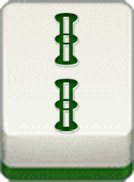
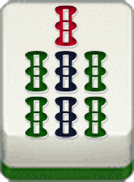
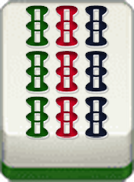
Priority 2 — Pass Isolated Tiles (Regardless of Suit)
An isolated tile is one with no adjacent tiles of the same suit in your hand — for example, a lone 6 Wan when you hold no 4, 5, 7, or 8 Wan. Isolated tiles cannot form sequences without drawing very specific combinations, making them low-value hand members.
If you cannot do a clean void suit pass (for example, you only have 2 Tiao tiles and need to pass 3 from the same suit), look for the suit that has the most isolated tiles and pass those.



Priority 3 — Keep Connected Tiles at All Costs
Connected tiles are tiles that are adjacent in rank within the same suit — meaning they can form or contribute to sequences. The presence of adjacent tiles multiplies their value far beyond their individual worth.
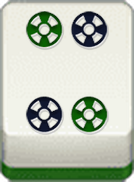
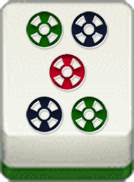
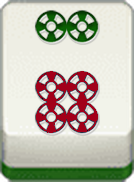


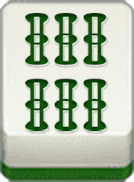

Priority 4 — Pass Tiles That Weaken Your Structurally Weakest Suit
If your hand is roughly balanced (equal tiles across all 3 suits with no clear void candidate), pass 3 tiles from the suit with the worst structure — mostly isolated tiles, highest terminal count, least adjacency. This is essentially the same as Priority 2, applied when no suit is an obvious void candidate.
6. Reading Your Starting Hand Before the Exchange
Before making any exchange decision, take a moment to assess your starting hand. Here is a sample hand to work through:




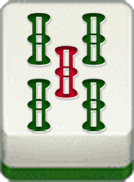
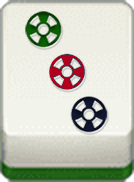
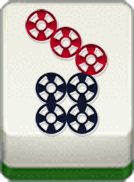
Assessment:
- Wan (5 tiles): 2-3-4 Wan is a complete sequence. 7-8 Wan is a two-sided wait (needs 6 or 9). Strong suit — keep it.
- Tiao (3 tiles): 1 Tiao (isolated terminal), 5 Tiao (isolated), 9 Tiao (isolated terminal). No adjacency at all — this is your void suit candidate.
- Tong (5 tiles): 3-4-5 Tong is a complete sequence. 7-7 Tong is a pair (potential triplet with a Pong). Strong suit — keep it.
Verdict: pass all 3 Tiao tiles (1, 5, 9 Tiao — all isolated). Declare Tiao as void. This is about as clean an exchange decision as you will ever see.
7. Example 1 — Strong Wan Hand: Pass Tong
Here is a hand where Wan is very strong and Tong is clearly the void candidate:

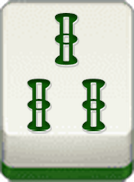
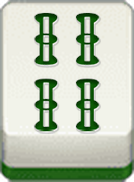

With only 2 Tong tiles (2 and 6 Tong — no adjacency), and both Wan and Tiao looking strong, the plan is to void Tong. But you need 3 tiles to pass and you only have 2 Tong. Your options:
- Pass 2 Tong, 6 Tong, and one weak Tiao or Wan tile — but you cannot mix suits
- Pass 3 Wan tiles from the weaker range (8, 9 Wan are terminals — weaker than middle Wan)
- Pass 3 Tiao tiles — but Tiao has a complete sequence (3-4-5), which you should not break
Best move: pass 1 Wan, 8 Wan, 9 Wan — the three weakest Wan tiles. Keep the core Wan sequences (2-3 and 5-6-7), declare Tong as void, and discard the remaining 2 Tong tiles at the start of play.
8. Example 2 — Mixed Hand: Decide Void First
Now a harder case — a hand where no suit is clearly dominant:

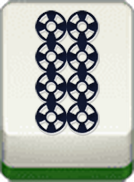
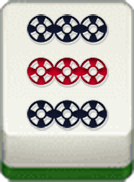
Assessment:
- Wan (3 tiles): 3, 5, 7 Wan — no adjacency. Three isolated tiles. Excellent void candidate.
- Tiao (5 tiles): 2-3-4 complete sequence. 8-9 two-sided wait (needs 7 or would complete 7-8-9). Very strong.
- Tong (5 tiles): 1 Tong isolated terminal. 4, 6 — one gap (needs 5). 8-9 two-sided wait. Decent structure but the 1 Tong is dead weight.
Verdict: Wan is clearly the void suit — 3 isolated non-adjacent tiles with no sequence potential. Pass all 3 Wan tiles.
9. Example 3 — Adapting After Receiving
The exchange is not just about what you give — it is also about what you receive. Here is a hand where receiving changes the plan:
Initial assessment: Tong has a pair (6-6) and some scattered tiles. Wan is strong. Tiao is building nicely. Plan: pass 3 Tong tiles (1, 3, 5 Tong — all isolated), keep Wan and Tiao, declare Tong void.
After passing, the player receives 3 Tiao tiles: 6, 7, 9 Tiao. Their hand after exchange:
Reassessment after receiving: Tiao is now extremely strong — potential for a 7-7-7 triplet + 6-7-8 or 7-8-9 sequence. Wan still has 4-5-6 complete. Tong has 6-6 pair only. The plan remains: declare Tong as void, discard 6-6 Tong pair early (they cannot be the pair if Tong is void). The received Tiao tiles dramatically improved the hand.
10. Common Beginner Mistakes
| Mistake | Why It Hurts | What to Do Instead |
|---|---|---|
| Passing randomly without assessment | You might break up your best sequences | Spend 10 seconds reading your hand before selecting any tile |
| Passing tiles from your strongest suit | You weaken your best winning path | Identify your weakest suit and pass from there |
| Keeping void suit tiles through the exchange | More void tiles to discard during play — Flower Pig risk | Use the exchange to dump as many void suit tiles as possible |
| Deciding void suit after choosing exchange tiles | Exchange and void are joint decisions — optimize together | Identify tentative void suit before selecting exchange tiles |
| Breaking up a complete sequence (3 connected tiles) | Destroys a guaranteed set for no gain | Never break a complete 3-tile sequence |
| Passing your only pair | The pair is the 'eyes' of your hand — hard to replace | Unless it is a void suit pair, keep pairs; they are valuable |
| Passing tiles that form a two-sided wait | Two-sided waits are among the most valuable unfinished sets | Keep adjacent tile pairs (e.g. 3-4, 6-7) — they need only 1 draw to complete |
11. Advanced: Anticipating What Your Opponent Will Pass
Once you have played several rounds, you can start thinking about what tiles you might receive — not just what you are passing. The direction determines whose tiles you will get. Here is how to reason about it:
- Players typically pass their weakest suit and intended void suit tiles. If you know (from previous rounds or general tendencies) that your left opponent tends to have strong Wan hands, passing to them Left means they will probably pass non-Wan tiles — likely Tiao or Tong — back to you. You might receive useful tiles for your own non-Wan suits
- Players very rarely pass tiles that are part of a complete sequence or a strong cluster. So you are unlikely to receive a 3-4-5 triplet from anyone — more likely isolated tiles and terminals
- If the exchange direction is "Across," the player opposite you may have a very different hand composition from you, making what they pass less predictable — but also potentially offering tiles in suits you need
This level of anticipation is an advanced skill. As a beginner, focus entirely on optimizing your own pass. Thinking about what you will receive can inform marginal decisions (e.g., if you think you will receive Tong tiles, being slightly more willing to pass Tong you are holding), but your primary optimization target is always what you give, not what you might get.
- Exchange
- The mandatory phase at the start of each round where every player passes exactly 3 same-suit tiles to another player. All exchanges happen simultaneously.
- Exchange Direction
- The direction tiles are passed: Across (opposite player), Left, or Right. Randomly determined each round. The same direction applies to all players.
- Void Suit
- The suit you plan to exclude from your winning hand. Ideally, you pass void suit tiles in the exchange to reduce how many void tiles you hold entering play.
- Isolated Tile
- A tile with no adjacent tiles of the same suit in your hand. Example: 6 Wan when you hold no 4, 5, 7, or 8 Wan. It cannot form sequences without drawing multiple specific tiles.
- Two-Sided Wait
- Two adjacent tiles of the same suit (e.g. 3-4 Tong) that can be completed by drawing either of two tiles (2 or 5 Tong). The most valuable type of unfinished sequence fragment.
- One-Gap Wait
- Two tiles of the same suit separated by one rank (e.g. 6-8 Tong). Can only be completed by drawing the one specific middle tile (7 Tong). Less flexible than a two-sided wait but still worth keeping.
- Connected Tiles
- Tiles that are adjacent or near-adjacent in rank within the same suit. They have high sequence-forming potential and should generally be kept through the exchange.
- Terminal
- Rank 1 or rank 9 in any suit. These have only one valid sequence direction and are the first candidates to pass in the exchange if isolated.