You know the rules. You understand what Pong and Kong mean. You know you need four sets and one pair. But you keep losing — not by a little, but consistently. The good news: most beginner losses in Blood Battle Mahjong come from the same handful of fixable mistakes. These 10 mahjong strategy tips address the most common ones and will immediately improve your results.
Tip 1 — Choose Your Void Suit Before Your First Discard
The single most important decision in every round of Blood Battle Mahjong is choosing your void suit. Your void suit is the one you will not use in your winning hand — every tile from that suit must leave your hand before you can win. The mistake beginners make is delaying this decision. Do not wait. Choose before you make your first discard.
How to choose: after the tile exchange, count how many tiles you have in each suit. Void the suit with the fewest tiles — that way you have the least to discard. If two suits are tied, pick the one with tiles that are harder to sequence (isolated high or low tiles with no adjacent neighbors).
Tip 2 — Discard Void Suit Tiles Immediately
Once you have chosen your void suit, start discarding those tiles on your very next turn. Do not hold void suit tiles hoping they might be useful later — they will not. Holding void tiles wastes turns you could spend building your real hand, and more critically, risks the Flower Pig penalty : if the round ends and you still hold void tiles, you pay every player who is in tenpai. That penalty often costs more coins than losing three normal hands.
The rule: void tiles first, hand building second. No exceptions, no delays.
Tip 3 — Prefer Flexible Middle Tiles (4-5-6)
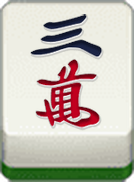
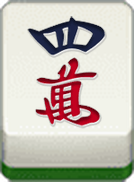
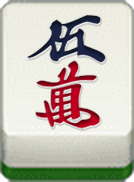
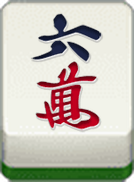
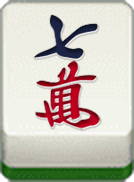
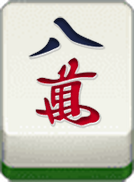
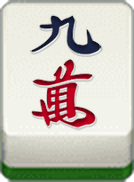
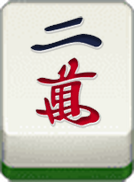
Not all tiles are equally useful. Tiles in the middle of the suit — ranks 4, 5, 6, and 7 — are the most flexible because they can complete sequences in more directions. A 5 Wan can be part of 3-4-5, 4-5-6, or 5-6-7. A 9 Wan can only complete 7-8-9. When choosing which tiles to keep and which to discard early on, favor the middle tiles.
Tip 4 — Count Your Tiles Per Suit After the Exchange
After the tile exchange, take a moment to count exactly how many tiles you have in each suit. This takes 5 seconds but shapes every decision you make for the rest of the round:
- Dominant suit (6+ tiles): your primary building target
- Secondary suit (4–5 tiles): supporting sequences or a backup
- Weak suit (1–3 tiles): almost certainly your void suit
If you have 7+ tiles in one suit after the exchange, consider committing fully to that suit for Qing Yi Se (all same suit) — the most powerful common pattern at 4 fan (16× base rate).
Tip 5 — Build Toward Tenpai Early
Tenpai means your hand is one tile away from winning. Being in tenpai is powerful: you can win on every single draw and every opponent discard. The earlier you reach tenpai, the more draw opportunities you collect, and the better your chances of winning by self-draw — which collects from all 3 opponents vs. just 1 on a discard win.
Being in tenpai also protects you at end of wall: tenpai players collect from non-tenpai players when the wall runs out, so even an inconclusive round is better when you are waiting.

Tip 6 — Don't Pong Unless It Clearly Helps
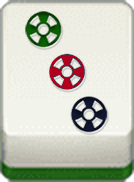
Ponging (claiming a discard to make a triplet) is tempting, but it has real costs in Blood Battle:
- It opens your hand — you lose Ping Hu eligibility (1 fan, all-sequences) and the Men Qian Qing bonus (+1 fan for closed self-draw)
- Opponents can see part of your hand, making you easier to read
- You skip a natural draw turn, which reduces self-draw chances
When is Pong worth it? Pong when targeting Peng Peng Hu (all triplets, 2 fan) or Qing Yi Se (pure suit, 4 fan) — both allow open melds. Do not Pong just because you can, especially early in the round.
Tip 7 — Watch Opponents' Discards for Danger Signals
Every tile an opponent discards is free information. You cannot see their hand, but you can infer what they do NOT need:
- Multiple same-suit discards early = they likely voided that suit — safer to discard the same suit yourself
- After an opponent Pongs, avoid discarding tiles that would complete their adjacent sequences
- Tiles appearing 3+ times in the discard pool are near-dead — only the 4th copy remains
Tip 8 — In Blood Battle, Never Give Up After Someone Wins
This is the mistake that costs beginners the most coins. In Blood Battle Mahjong, the round continues after the first player wins. You can — and must — keep playing. Here is why giving up is costly:
- If you win second or third, you still collect full payment from remaining active players
- Careless discards after the first win might pay the second or third winner
- If the wall runs out and you are not in tenpai, you pay every tenpai player
- Void tiles still trigger the Flower Pig penalty whenever the round ends
After someone wins: shift to a simpler but aggressive strategy. Drop high-fan ambitions and focus entirely on reaching tenpai as fast as possible.
Tip 9 — Aim for at Least Ping Hu (1 Fan)
A 0-fan win is legal but barely worth it — you collect only 1× base rate from one opponent on a discard win. Even Ping Hu (all sequences, closed hand) doubles that to 2× base, and as a self-draw win you collect from all three opponents.
Ping Hu is the most accessible pattern: keep your hand closed, build four sequences and one pair, and draw your winning tile from the wall. You do not need exotic combinations. A steady stream of Ping Hu self-draw wins is a strong strategy for beginners.

Tip 10 — Use Autopilot Mode to Learn
realmahjong.ai includes an Autopilot mode where the AI plays your hand for you. This is one of the most underused learning tools available. To use it effectively:
- Start a game and activate Autopilot for one or two full rounds
- Watch which tiles the AI discards first — always void tiles
- Watch how the AI handles partial sequences vs. isolated tiles
- Notice when the AI declines to Pong and when it decides to Pong
- Observe how the AI transitions from mid-game building to tenpai
- Take manual control and apply what you observed
Common Beginner Mistakes
| Mistake | Why It Hurts | Fix |
|---|---|---|
| Delaying void suit choice | Holding void tiles wastes turns and risks Flower Pig penalty | Decide before first discard; discard void tiles immediately |
| Ponging everything | Opens hand, blocks Ping Hu and Men Qian Qing bonuses | Only Pong when targeting all-triplets or pure-suit hands |
| Keeping isolated edge tiles | 1s and 9s are hard to sequence without neighbors | Discard isolated edge tiles; keep connected middle tiles |
| Giving up after first winner | You can still win and should play defensively | Simplify hand, race to tenpai |
| Aiming for 0-fan wins | Pays almost nothing — 1× base from one opponent | Build toward Ping Hu at minimum |
| Discarding tiles opponents need | If opponent Ponged, adjacent tiles are dangerous | Watch Pong declarations before choosing your discard |
| Holding too many suits late-game | Dilutes hand, slows tenpai | Commit to 2 suits maximum |
Reading the Game State
The Discard Pool
Every discarded tile is visible to all players. Tiles appearing 3 times are near-dead — the 4th copy is the only one remaining. Tiles appearing 0–1 times are live and potentially dangerous to discard.
Open Melds
When an opponent Pongs or declares a Kong, those tiles are visible. Their Pong reveals their suit focus. Avoid discarding tiles that complete sequences adjacent to their visible triplets.
Discard Tempo
If an opponent uses most of their turn timer before discarding, they are weighing a difficult decision — often a sign they are close to tenpai. Be more cautious about your next discard when opponents play slowly.
When to Play Defensively vs. Aggressively
| Situation | Approach | Reason |
|---|---|---|
| Early game (first 15 turns) | Aggressive — build the best hand you can | Plenty of tiles; low immediate risk |
| Opponent has Ponged 2+ times | Cautious — avoid their primary suit | They are likely approaching tenpai |
| First player has just won | Aggressive but simpler target | Race to win before the wall runs out |
| Fewer than 10 wall tiles remain | Defensive — prioritize tenpai | End-of-wall settlement is close |
| You are the only player not in tenpai | Very aggressive | Paying tenpai players at end of wall is expensive |
- Void Suit
- The suit you declare you will not use in your winning hand. Must discard all void tiles first.
- Flower Pig
- Holding void tiles at round end. Pay penalty to every tenpai player.
- Tenpai
- One tile away from winning. Protects you at end-of-wall settlements.
- Ping Hu
- All-sequences win. 1 fan. Requires fully closed hand (no Pong melds).
- Pong
- Claim a discard to complete a triplet. Opens your hand.
- Self-Draw
- Win by drawing your own tile from the wall. All active opponents pay.
- Discard Win
- Win on an opponent's discard. Only that player pays.
- Fan
- Scoring unit. Each fan doubles payout. Patterns stack additively.
- Blood Battle
- Game continues after first winner. Up to 3 players can win per round.
- Qing Yi Se
- All tiles same suit. 4 fan (16× base). The strongest common pattern.