Understanding the full flow of a Blood Battle Mahjong round helps you know what to expect at each stage and what decisions matter most. This walkthrough follows one complete round from dealing through winning, with commentary on what each phase means strategically.
Phase 1: Dealing
Each player receives 13 tiles. Before you do anything else, quickly survey your hand:
- Count tiles per suit. How many Wan, Tiao, and Tong do you have?
- Identify pairs and sequence shapes. Which tiles are connected (adjacent ranks, pairs)?
- Identify your weakest suit. Fewest tiles? Worst connectivity? This is your likely void suit.
This survey takes 10–15 seconds. It sets the foundation for your exchange decision.
Phase 2: Tile Exchange
Each player selects 3 tiles to give and receives 3 tiles from another player. Exchange direction rotates each round. This is the most strategically rich moment of the round.
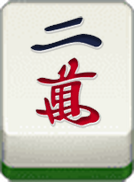
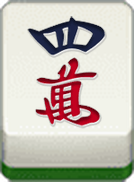
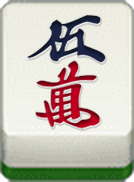
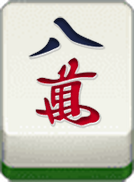
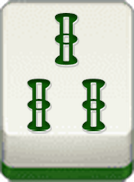
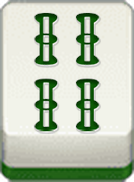
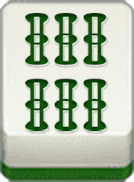

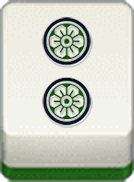
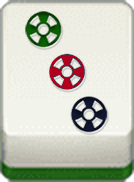
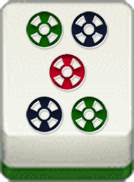
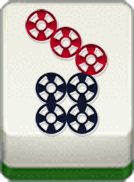
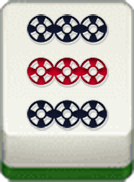
Analysis: 6 Tong tiles with strong connectivity (1-2-3 sequence complete, 5-7 gap, 9 isolated), 4 Wan with 4-5 sequence shape, 3 isolated Tiao. Clear choice: void Tiao. Give the 3 Tiao tiles.
After receiving 3 tiles from the exchange, immediately re-evaluate. Did you receive Tong tiles (great — more Tong connectivity)? Wan tiles (extend your Wan sequences)? Or back in Tiao (discard early in the round)?
Phase 3: Early Game (Turns 1–5)
The early game has one primary mission: clear your void suit and establish your active suits.
- Discard void suit tiles immediately. Any remaining void suit tiles (not given in exchange) go out in turns 1–3. Do not hold void tiles even if they look "useful."
- Pong opportunities in active suits. If an opponent discards a tile you have two of in your active suit, consider Ponging — especially if the pair is isolated.
- Survey opponent discards. Their early discards reveal their void suit. By turn 4, you likely know what each opponent is voiding.
- Protect your core structure. Keep pairs, partial sequences (two-sided waits especially), and your most connected tiles.
By end of turn 5: your void should be clear. You should have a clear hand direction (which hand type you are building). Your shanten should be 2 or lower from a viable path.
Phase 4: Mid Game (Turns 6–12)
The mid game is where hands develop and the table dynamic becomes clear. Key decisions:
- Assess your shanten at turn 6. If you are 3+ shanten, consider simplifying your hand goal. Time is running out to build a complex hand.
- Watch for tenpai signals from opponents. Mid-game Pong calls, a slowing discard pace, or very selective discards suggest an opponent is near tenpai.
- Continue building your strongest path. Keep only tiles that contribute to your hand goal. Discard anything else.
- Pivot if necessary. Turn 8 is the last viable pivot point. If your target hand is not materializing, switch to the fastest achievable tenpai.
Phase 5: Approaching Tenpai
As you approach tenpai (1–2 shanten), shift your attention to:
- Which tile to discard last. Your final discard determines your waiting shape. Always choose the discard that leaves you with the widest wait (most outs).
- Dead tile check. Scan all discard pools for your waiting tiles. If 3+ copies are visible, that wait is nearly dead. Consider an alternative.
- Closed or open hand? If Ponging will reveal your wait and let opponents stop discarding your tile, consider whether closing your hand for a concealed bonus is worth the wait.
Phase 6: Tenpai
You are one tile away from winning. Key tenpai questions:
- What is my waiting shape? Two-sided, middle, edge, single, dual pong?
- How many outs do I have? Count remaining copies of your winning tile(s) across all sources.
- Are opponents near tenpai? If yes, be cautious about discarding tiles from their active suits that could help them win.
- Self-draw vs discard win. Self-draw pays triple — worth waiting for if you have a good chance of drawing your tile.
In tenpai, you continue to draw and discard. Draw your tile → win. Draw something else → discard it (carefully — avoid giving opponents their winning tile if possible). Continue until you win or the wall runs out.
Phase 7: Winning and Settlement
When you win, the round ends and settlement is calculated:
- Fan count determined. Your fan patterns are counted (Flat Hand, Pure One Suit, etc.).
- Payout calculated. Base payout = 2^fan. Multiplied by number of paying opponents.
- Self-draw: All three opponents pay. Discard win: only the discarding player pays.
- No-win round (wall exhausted): No payment. Round ends with no winner.
Round Summary: Decision Points
| Phase | Turn Range | Key Decision |
|---|---|---|
| Dealing | 0 | Survey hand: count suits, identify pairs/sequences |
| Exchange | 0 | Give void suit tiles + isolated tiles; reassess after receiving |
| Early game | 1–5 | Clear void; protect structure; read opponents' void suits |
| Mid game | 6–12 | Assess shanten; pivot if needed by turn 8; watch for opponent tenpai signals |
| Approaching tenpai | 10–15 | Choose discard for widest wait; dead tile check |
| Tenpai | 12+ | Draw safely; avoid helping opponents; wait for self-draw if viable |
| Settlement | Round end | Fan patterns calculated; payouts applied |