Pure One Suit (Qīng Yī Sè) means your entire winning hand — all four sets and your pair — comes from a single suit of numbered tiles. No tiles from other suits, no mixing. It is worth 2 fan, making it the single highest-value individual fan pattern in Blood Battle Mahjong. When combined with other patterns like Flat Hand, Seven Pairs, or Self-Draw, Pure One Suit is at the center of every high-scoring hand in the game.
1. What Pure One Suit Requires
All 14 tiles in your winning hand must come from the same suit — Wan, Tiao, or Tong. Your four sets and your pair are entirely within that suit. Nothing from the other two suits.


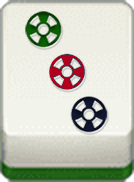
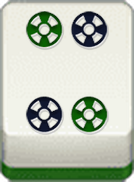
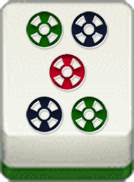
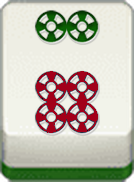
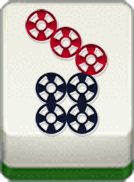
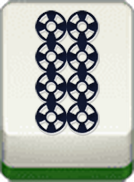
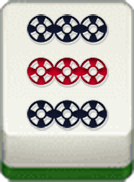
In Blood Battle Mahjong, your two non-void suits become your active suits. If you aim for Pure One Suit, you are going further — restricting your active hand to one suit and using the other as overflow (which you will still discard eventually).
2. Why Pure One Suit Is Worth Pursuing
| Combination | Fan | Payout |
|---|---|---|
| Pure One Suit alone | 2 | 4× |
| + Flat Hand | 3 | 8× |
| + All Pong | 3 | 8× |
| + Seven Pairs | 4 | 16× |
| + Flat Hand + Self-Draw + Closed | 5 | 32× × 3 opponents = 96× total |
| + Seven Pairs + Self-Draw | 5 | 32× × 3 opponents = 96× total |
3. Choosing Which Suit to Go Pure
After the tile exchange, count your tiles per suit. The suit with the most tiles and best connectivity is your Pure One Suit target. Connectivity means adjacent ranks (like 3-4-5 or 6-7) that can form sequences, or multiple pairs that can form triplets.
Example: you have 8 Tong tiles with 2 complete sequences and 2 pairs, 4 Wan tiles, and 2 Tiao tiles. Void Tiao (fewest). Then assess: can the 4 Wan tiles eventually be discarded too while building only with Tong? If yes, aim for Pure One Suit Tong.
4. Building the Hand: Managing the Secondary Suit
Your target suit needs 14 tiles to win. After the exchange, you might have 8 of them and 4 tiles from the other active suit. Your job is to:
- Clear void suit immediately (turns 1–4).
- Keep drawing target suit tiles, building sets and pairs.
- Discard secondary active suit tiles as soon as they become redundant (when you have enough target suit tiles to fill the hand).
- Protect your most connected target suit tiles — pairs, partial sequences, anything that forms multiple possible sets.
5. The Risk: Opponents Read Your Suit
If you Pong a tile (exposing a set), opponents immediately know which suit you are building in. They then stop discarding that suit. For Pure One Suit, the best approach is a closed hand: draw everything yourself, Pong as little as possible. A closed Pure One Suit hand also earns the Closed Hand Bonus when you win, adding +1 fan.
If you must Pong to stay on pace, do it early (turns 1–5) before opponents fully establish their own hands. Mid-game Pongs in a Pure One Suit hand telegraph your direction at the worst time.
6. When Pure One Suit Is Not Viable
- Your tiles are evenly spread across three suits. If you have 4-5 tiles of each suit, Pure One Suit requires discarding 10 tiles from two suits while drawing 6 more from one — unlikely.
- Your target suit tiles are disconnected. Isolated 1s and 9s without middle tiles to connect them make sequences nearly impossible. Switch to a mixed-suit approach.
- Opponents are moving fast. Pure One Suit takes longer than a standard 2-suit hand. If one opponent is already likely in tenpai by turn 6, switch to the fastest path to tenpai regardless of fan value.
7. Pure One Suit + Flat Hand: The Most Common High-Value Path
The most consistent high-value hand in Blood Battle Mahjong is Pure One Suit + Flat Hand (+). This means all four sets are sequences (no triplets), all from one suit. It scores 3 fan = 8× base. With self-draw and closed hand bonus, it becomes 5 fan = 32× × 3 = 96× base.
How to aim for it: build sequences within your target suit. Prefer drawing connected tiles (4-5 waiting for 3 or 6, etc.) over drawing isolated tiles that force triplets. When choosing between keeping a pair (→ triplet path) and keeping a two-sided sequence shape (→ flat hand path), choose the sequence when going for Pure One Suit Flat Hand.