Pong (Pèng) is the act of claiming an opponent's discard to complete a triplet — three identical tiles. It is one of the most important decisions in Blood Battle Mahjong, and one of the most misused by beginners. Ponging at the right moment accelerates your hand dramatically. Ponging at the wrong moment locks you into a direction your remaining tiles cannot support, or broadcasts exactly what you need to opponents who then stop discarding it.
1. What Pong Does to Your Hand
When you Pong, three things happen simultaneously:
- A set is locked. The three tiles become an exposed set on the table — immovable for the rest of the round.
- You discard. After Ponging, you must immediately discard one tile from your remaining hand.
- Your turn order changes. In Blood Battle Mahjong, Ponging grants you the right to discard next — even if it was not your turn.
2. The Core Benefit of Pong
Pong locks in a complete set instantly without drawing it from the wall. Normally, completing a triplet requires holding two tiles and drawing the third — which could take many turns. Pong delivers the third tile immediately when an opponent discards it. This is a significant speed advantage.
Pong is especially powerful for:
- Completing the All Pong pattern — four Pong/Kong sets and a pair.
- Locking in a set quickly when you are 2+ shanten away and need to close fast.
- Converting a useful pair into a Pong set when the third tile appears early.
3. The Hidden Cost of Pong
Every Pong exposes information. Opponents can see exactly which tile you hold three of. This tells them:
- Your Pong tile is in your active (non-void) suit.
- You want more tiles from that suit — and now they know to avoid discarding nearby tiles.
- Your hand leans toward All Pong, which limits your pattern options.
After you Pong, smart opponents will stop discarding tiles that fit your likely hand. The more Pongs you have exposed, the more opponents can read and counter you.
4. When to Pong: Decision Framework
4.1 Pong If It Locks a Complete Set in Your Active Suit
If the discarded tile is in one of your two active suits and you hold two of it, Pong is almost always correct — especially if the pair was isolated (not connected to any sequences in your hand). Converting an isolated pair into a Pong set is efficient.
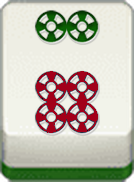
4.2 Pong If You Are Building All Pong Hand
If you are pursuing (All Pong), Pong every pair in your active suit whenever the opportunity appears. You need four Pong/Kong sets — collect them aggressively.
4.3 Skip Pong If the Tile Is More Useful as a Sequence
Sometimes a tile you hold two of is actually embedded in a sequence structure. Consider:
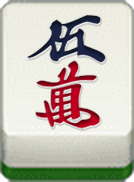
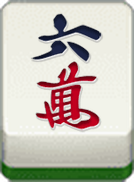
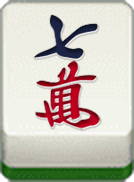
In this case, letting the 5-Wan go and keeping the 5-6-7 structure intact is often better than Ponging and breaking the sequence.
4.4 Skip Pong If You Are Pursuing Seven Pairs
Seven Pairs requires 14 concealed tiles. Ponging immediately disqualifies your hand from Seven Pairs. If you have 4+ pairs and are going for Seven Pairs, never Pong — even if it feels tempting.
4.5 Skip Pong If Your Void Suit Is Not Cleared
After Ponging, you must discard immediately. If your hand is full of void suit tiles you have not cleared yet, a Pong can trap you — you want to discard void tiles, but now you also need to manage a new set. Finish clearing your void suit before Ponging.
5. Pong and Self-Draw Trade-Off
Ponging exposes a set, which disqualifies you from the closed-hand bonus and reduces self-draw fan. If you were planning to win by self-draw with a closed hand, consider whether the Pong speed gain is worth losing those fan bonuses.
| Situation | Pong or Skip? |
|---|---|
| Isolated pair in active suit, no sequence potential | Pong — get the set fast |
| Pair embedded in a partial sequence | Skip — preserve the sequence |
| Pursuing All Pong hand | Pong always — it is your target pattern |
| Pursuing Seven Pairs | Skip always — Pong disqualifies the hand |
| Closed hand + high self-draw potential | Skip — protect your fan bonuses |
| Void suit not yet cleared | Skip — finish void-clearing first |
6. The Pong-Then-Discard Decision
After Ponging, you must immediately discard. Choose wisely:
- Discard void suit tiles first (Flower Pig prevention).
- Discard isolated tiles that do not connect to anything in your remaining hand.
- Never discard a tile that breaks one of your partial sequences unless you are pivoting your hand plan.