Every round of Blood Battle Mahjong begins with 13 tiles after the exchange phase. What you do in the first 60 seconds of each round — how you read those 13 tiles and set your plan — determines the entire trajectory of the round. Beginners look at their opening hand and start discarding randomly. Good players read their hand in a structured way, decide which winning pattern to aim for, identify their void suit, and commit to a plan before making their first discard.
1. The Opening Hand Assessment (30 Seconds)
When your 13 tiles arrive after the exchange, do this assessment before touching any tile:
- Count tiles per suit. How many Wan, Tiao, and Tong do you have?
- Count pairs and triplets. How many tiles do you have 2+ of?
- Count connected tiles. How many adjacent tiles exist within each suit (like 4-5, 6-8, etc.)?
- Identify the weakest suit. The suit with fewest tiles = your void suit candidate.
2. Choosing Your Hand Goal
Based on the assessment, choose one of four hand directions:
Direction 1: Sequence Hand (path)
Best when: your active two suits have many connected tiles (adjacent ranks, partial sequences). Goal: complete four sequences plus a pair. Aim for Pure One Suit if one suit dominates. Target fan: 1–3 fan (Flat Hand, possibly + Pure One Suit).







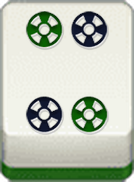

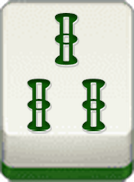
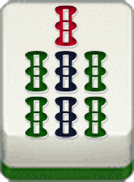
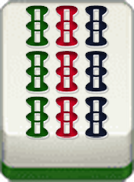
Direction 2: Triplet Hand (path)
Best when: you have 3+ pairs or triplets after the exchange. Your plan is to Pong as many tiles as possible. Warning: Ponging reveals your hand direction and opponents will cut you off. Target fan: 1–3 fan (All Pong, possibly + Pure One Suit).
Direction 3: Seven Pairs (path)
Best when: you have 4+ pairs after the exchange. Go for seven pairs from two suits. Do not Pong. Do not expose your hand. Target fan: 2–5 fan (Seven Pairs, possibly + Pure One Suit + Self-Draw).
Direction 4: Fast and Flexible (no specific pattern)
Sometimes your hand has no clear direction. Your tiles are spread across three suits, no strong pairs or sequences. The goal is simply: reach tenpai as fast as possible. Accept 0–1 fan and win quickly rather than chasing patterns that are not there.
3. Setting Your Void Suit
Once you have chosen your hand direction, set your void suit:
- If going for Sequence or Triplet Hand: void the suit with fewest tiles and least connectivity.
- If going for Seven Pairs: void the suit with fewest pairs (or fewest tiles overall).
- If flexible: void the suit with fewest tiles. Simple.
After setting void suit, your first 3–5 discards should clear it completely. Never delay.
4. Measuring Distance to Tenpai (Shanten Count)
"Shanten" is the number of tiles you still need to reach tenpai. The lower the better:
| Shanten | Meaning |
|---|---|
| 0 shanten | Already in tenpai — waiting for win tile |
| 1 shanten | One more useful tile = tenpai |
| 2 shanten | Two more useful tiles = tenpai |
| 3+ shanten | Far from tenpai — need to draw aggressively |
After each draw, ask: did that draw reduce my shanten? If you are consistently drawing tiles that do not help (tiles from your void suit or isolated tiles you have to discard), your hand is progressing slowly. Consider pivoting to a simpler hand goal.
5. When to Change Your Plan
No opening plan survives contact with the wall. Know when to pivot:
- By turn 5: If your hand direction is not materializing (you have not drawn a single useful tile), consider switching to the flexible "fast tenpai" approach.
- By turn 8: If you are still 3+ shanten away, your hand target was too ambitious. Simplify immediately.
- Any time a Pong becomes available: Ask if it fits your plan. A Pong that advances your hand is good. A Pong that locks you into a direction your draws are not supporting is a trap.
- If opponents start moving fast: Speed becomes the priority. Drop high-value pattern aspirations and just reach tenpai on anything.
6. A Full Opening Example
After the exchange, you have: 3 Wan tiles (2-wan, 5-wan, 5-wan), 7 Tong tiles (1-2-3-4-4-7-8), 3 Tiao tiles (5-8-9).
Assessment: Tiao has 3 tiles (weakest) → void Tiao. Tong has 7 tiles with strong connectivity (1-2-3 is a complete sequence, 4-4 is a pair, 7-8 needs a 6 or 9). Wan has 5-5 pair and a lone 2-wan.
Plan: Void Tiao immediately (discard 5-Tiao, 8-Tiao, 9-Tiao in first turns). Build with Tong sequences (1-2-3 locked, 4-4 pair locked, 7-8 awaiting 6 or 9). Wan: keep 5-5 as a flexible pair. Discard 2-wan if nothing connects. Direction: Sequence hand, possibly Pure One Suit Tong if Wan tiles don't improve. Target: 2–3 fan.
7. Practice Habit: Read Before You Touch
Make one rule: after every exchange, read all 13 tiles and form a plan before you touch any tile. Even 15 seconds of structured reading will produce better first discards than instinctive play. Track your opening shanten count for a few rounds and you will quickly learn which hand types are actually achievable for you.