The tile exchange phase is unique to Sichuan Blood Battle Mahjong. Before the round begins, each player selects three tiles from their hand to give — and receives three tiles from another player. The exchange direction rotates each round. Most beginners treat the exchange casually, passing whatever feels useless. Expert players treat it as the most important decision of the round — because the three tiles you pass, and the three you receive, shape the entire game that follows.
1. Exchange Direction Matters
In Sichuan mahjong, the exchange direction rotates: one round you pass to the player on your right, the next to the player across, the next to the player on your left, and sometimes a "self-exchange" (you keep your three selected tiles, or exchange with the wall in some variants).
Why it matters: you know who you are giving to and who you are receiving from. If you are giving to the player on your right, you are directly helping them. If you are receiving from the player across from you, you know one thing about their hand: those three tiles were their weakest. Use this information.
2. What to Give Away
The core principle: give tiles that help you most to be rid of, and hurt your recipient least.In practice, this means:
Priority 1: Give Your Future Void Suit Tiles
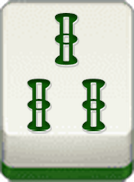
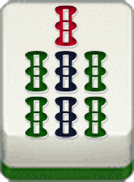
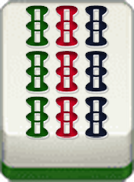
Before the exchange, you can see your full 13-tile hand. If you plan to void Tiao, give away Tiao tiles. This achieves two goals at once: you reduce your void-clearing workload, and you establish your void suit before the round even begins.
Priority 2: Give Isolated Tiles Without Connections
An isolated tile is one that forms no sequence or pair in your active suits. Isolated 1-wan and 9-tong when your active hand has no nearby tiles are dead weight. Pass them rather than tiles connected to sequences or pairs.
Priority 3: Do Not Give Away Pairs or Partial Sequences
A pair in your active suit is precious — it can become a Pong, a Seven Pairs contribution, or your final winning pair. A partial sequence (4-5 waiting for 3 or 6) is half a complete set. Give neither. Keep everything connected. Pass isolated tiles only.
3. What to Hope to Receive
You cannot control what you receive, but you can anticipate and react quickly. When you receive three tiles, immediately re-evaluate your hand:
- Did you receive tiles that pair with what you already hold? A pair you did not have before is a significant improvement.
- Did you receive tiles that extend your sequences? A 6-wan when you hold 4-5-wan completes a sequence.
- Did you receive tiles from your void suit? Discard them immediately in turns 1–2. They are waste even if they look pretty.
- Did you receive tiles that shift your hand direction? Sometimes three tiles from a specific suit suggest pivoting to Pure One Suit in that suit.
4. Strategic Passing: Give Tiles to Hurt Opponents Less
You cannot always choose what to give based purely on your own hand. Sometimes you must consider what the tiles you give will do to your recipient:
- Avoid giving easily Ponged tiles. If you have three copies of a tile and give one away, the recipient now holds one — and might Pong the next copy discarded by another player, accelerating their hand. Give tiles you have only one or two of.
- Avoid giving middle tiles (4-6). Middle tiles fit into the most possible sequences. Give terminals (1, 9) or tiles that are harder to connect.
- Give tiles that counter your recipient's direction. If you already know your recipient leans toward sequences (from previous rounds), give them triplet-friendly tiles like isolated pairs. If they lean toward triplets, give them sequence-oriented tiles. This is meta-game reading.
5. The Self-Exchange Round
In some Sichuan variants, one round per game is a "self-exchange" — you pick three tiles to set aside from your hand, then receive them back (effectively rearranging which tiles are in play for you). In this round, use the exchange to:
- Set aside your worst three tiles and draw three fresh from the remaining unused tiles (if the variant supports this).
- Or simply keep your hand intact — there is no "giving" to opponents in this round.
6. Quick Exchange Checklist
- Which suit will I void? → Give all tiles of that suit first.
- Are the remaining tiles I consider giving isolated or connected? → Only give isolated.
- Am I giving any pairs or partial sequences? → Do not. Keep them.
- After receiving: has my void suit choice changed? → Reassess immediately.
- After receiving: any new pairs or sequence extensions? → Update your hand plan.