You understand every rule. You know the fan patterns and can reach tenpai most rounds. But you still lose to players who seem to always discard exactly what you do not need, and who win on self-draw while you win on discards. This guide covers what separates intermediate players from advanced ones: precise waiting pattern selection, hand efficiency measurement, defensive reading, and endgame decision-making.
1. What Separates Intermediate from Advanced Play
Intermediate players focus on building a winning hand. Advanced players focus on hand efficiency: how many tiles away from tenpai am I, and which discard minimizes that distance most? Advanced players also think two steps ahead — not just "what do I want" but "what are my opponents building, and how does that change what I should discard?"
The three skills that define advanced mahjong play:
- Waiting pattern mastery — knowing all 5 patterns, their strengths and weaknesses, and how to maximize your win probability
- Opponent modeling — reading discard patterns to understand what others are building
- Endgame decision-making — knowing when to rush, when to wait, and when to defend
2. All 5 Waiting Patterns — Deep Dive
When your hand is in tenpai (one tile from winning), your specific incomplete configuration determines your waiting pattern. Each pattern has a different number of winning tiles and a different win probability.
Pattern 1 — Two-Sided Wait (liǎng miàn)
You hold two consecutive tiles (e.g., 4-5) and are waiting for either the lower end (3) or the upper end (6) to complete a sequence. Two different tile types, up to 8 live tiles— the maximum of any wait pattern.
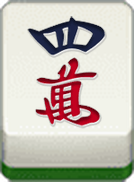
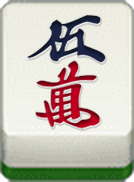
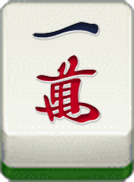
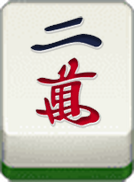
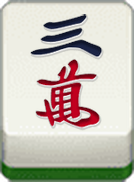
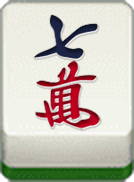
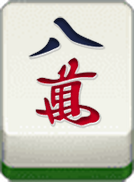
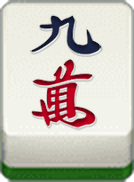
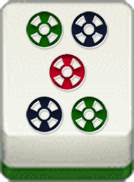
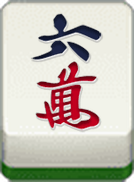
Two-sided wait is the strongest waiting pattern. When designing your hand, always prefer a discard that leaves your final incomplete block as a two-sided wait. Compared to an edge wait or middle wait, two-sided has up to 2× the winning tiles.
Pattern 2 — Edge Wait (biān zhāng)
You hold the edge of a sequence (1-2 waiting for 3, or 8-9 waiting for 7). Only 1 winning tile type, maximum 4 live tiles.

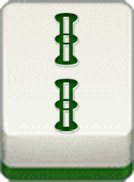
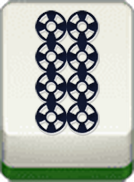
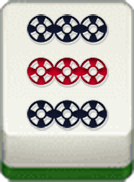
Edge wait is weak — half the win probability of two-sided. Avoid entering tenpai with an edge wait if restructuring is possible. If you are stuck in an edge wait, try to at least identify whether your waiting tile is live (not heavily discarded).
Pattern 3 — Closed Wait (qiàn zhāng / kanchan)
You hold two tiles with a gap (e.g., 4 and 6) and are waiting for the middle tile (5). Only 1 winning tile type, maximum 4 live tiles. Also called "kanchan wait."
Closed wait is predictable — opponents who have been tracking the discard pile can sometimes identify your wait more easily, since there are no other completing tiles. When in a closed wait, the middle-ranking tiles (4, 5, 6) are more contested — count live tiles carefully.
Pattern 4 — Single Tile Wait (dān diào)
All four of your sets are complete. You are waiting for one specific tile to form your pair. Only 1 winning tile type, maximum 2 live tiles (since you already hold 2 of the same tile for the partial pair, only 2 more exist in the entire game).
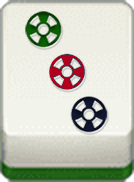
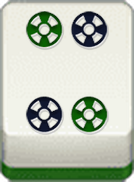
Single tile wait is the rarest and has the fewest live tiles. However, it earns a valuable defensive benefit: opponents cannot easily identify what you are waiting for since all your sets are complete. This makes it excellent for blocking discard reads.
Pattern 5 — Double Pair Wait (shuāng pèng)
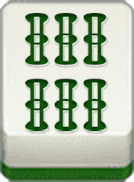
You hold two pairs and have all other sets complete. You are waiting for either pair tile — whichever comes first completes one pair into a triplet (set) and the other remains as your winning pair. Two winning tile types, but only 2 live tiles of each type(you already hold 2 of each pair).



3. Hand Efficiency: The Shanten Number
The shanten number measures how many tiles you still need to draw before reaching tenpai. Tenpai itself is shanten 0. A hand that needs one more useful tile is shanten 1. A hand needing two useful tiles is shanten 2, and so on.
Every discard decision should ask: which discard reduces my shanten number most?
4. Defensive Play: Reading Danger
Advanced defensive play has three layers, each more refined than the last:
Layer 1 — Safe Tiles
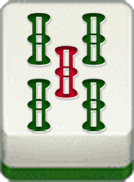
The safest discard is always a tile that has already been discarded by the same opponent. If player A discarded 6 Tiao three turns ago, your own 6 Tiao is extremely safe to play against player A — they clearly did not need it.
Layer 2 — Counting Copies
Each tile appears 4 times. If 3 copies of a tile are visible (in discard piles or opponent open melds), the 4th is the last remaining. If you need that tile, only 1 chance remains. If you are deciding whether to discard it, the person holding it can win — but only 1 person maximum is waiting for it.
Layer 3 — Reading Opponent Behavior
The most powerful defensive reads come from observing patterns over many discards:
| What You Observe | What It Likely Means | Your Action |
|---|---|---|
| Opponent stops discarding one suit entirely after turn 5 | Committed to that suit (likely pure-suit) | Treat that suit as dangerous — avoid discarding it |
| Opponent discards many tiles of one suit early | Probably voided that suit | That suit is safe to discard against them |
| Opponent Pongs a tile | Strong commitment to Pong suit; likely pure-suit or all-triplets | Avoid tiles adjacent to their Pong set |
| Opponent discards high-value tiles late (e.g., 7-8-9) | Forced to simplify — possibly abandoned a complex hand | Hand may be in tenpai with different structure now |
| Opponent uses full timer every discard in late game | In tenpai, weighing safe tiles | Be very cautious — they are waiting |
5. Tile Counting Basics
Advanced play requires active tile counting. The process:
- When you need a specific tile, start with 4 total copies
- Subtract copies in your own hand
- Subtract copies visible in all discard piles
- Subtract copies in opponents' open melds
- Result = live tiles still available
If you need 5 Wan to complete a sequence, and you already hold 1, and 2 have been discarded, only 1 copy remains in the entire game — in the wall or in a concealed hand. The decision to hold vs. restructure depends entirely on whether 1 live tile is sufficient given the remaining wall size.
6. The Blood Battle Endgame Strategy
Blood Battle's "game continues after first win" rule creates a unique endgame dynamic. After the first player wins:
- There are now 2 active players who can pay you (the first winner stepped out)
- The wall is shorter — fewer tiles remain, raising urgency
- Players who have not won yet become more desperate — their discards may become riskier
Key endgame decisions:
| Situation | Recommended Action | Reasoning |
|---|---|---|
| You have a 3+ fan hand, first player just won | Win immediately — do not wait for self-draw | Collecting from 2 opponents at 8× is still excellent; do not risk another win reducing payers |
| You have a 1 fan hand, first player just won | Wait for self-draw if possible | 1-fan discard win from 1 opponent is weak; +1 fan from self-draw doubles total earnings |
| You are the only player not yet in tenpai | Radically simplify — any win is better than last | Paying 2 tenpai players at end-of-wall is expensive; being last costs most |
| Two players are in tenpai, you are not | Pure defensive play | Every discard risks paying one of them; play only dead-safe tiles |
7. Manipulating Opponents with Your Void Suit
Once your void suit becomes obvious from your discards, opponents know which tiles are safe to discard against you — the tiles in your void suit. This is information leakage. Advanced players can use it strategically:
- Use their safety assumption: Once opponents believe they can freely discard your void suit, they stop worrying about those tiles. Meanwhile, you have already cleared your void suit and your hand is pure — their "safe" discards are irrelevant to your winning tiles. This lets you stay in tenpai without opponents becoming defensive about your real waiting tiles.
- Choose a less obvious void: In advanced play, sometimes voiding the suit with moderate tiles (not the fewest) can create confusion about what you are building, forcing opponents to be cautious across more suit tiles.
8. Kong Timing: When to Declare and When to Skip
Kongs generate immediate payment (from all active players), draw an extra tile, and add +1 fan (Gun Guo He bonus) if you win on the replacement draw. But they have tactical costs:
- Closed Kong (you hold all 4, declare during your turn): safest option. No discard, hides which tile was removed, earns immediate payment from all players.
- Open Kong (claim opponent's discard when you hold 3): reveals your suit commitment. Use only when in a pure-suit hand where the suit is already obvious.
- Extended Kong (upgrade a Pong triplet to Kong): can be robbed by an opponent in tenpai waiting on that tile. Late in the round when opponents are likely tenpai, extended Kongs are high-risk.
9. Multi-Way Tenpai
The most powerful tenpai configuration has 3 or more winning tile types. These arise from overlapping sequences in your hand — when a stretch of consecutive tiles can decompose in multiple ways.
Classic example: holding 3-4-5-6 in the same suit (as part of an otherwise complete hand). This block can decompose as:
- [3-4-5] + partial [6] waiting for 4 or 7 → wait on 4 or 7
- [4-5-6] + partial [3] waiting for 1 or 4 → wait on 1 or 4
- [3-4] + [5-6] → two two-sided waits simultaneously
In Blood Battle Mahjong where no Chi is allowed, multi-way waits naturally develop in your primary suit when you have a long connected run. This is another reason to commit to a single suit early: the longer your consecutive run, the more multi-way possibilities emerge.
10. Advanced Void Suit Strategy
Beginners void the suit with fewest tiles. Advanced players consider a second factor: what does my void suit reveal about my hand?
If you always void the same suit in similar starting hands, experienced opponents will read your void pattern and immediately know which two suits you are building in. This makes your winning tiles predictable and reduces opponents' need to be cautious.
Occasionally voiding a suit that is not your weakest — sacrificing a few extra discards — can create genuine confusion about your strategy. The cost is 1–2 extra discards to clear the larger void. The benefit is opponents being less able to play "safe" tiles against you.
- Shanten
- Number of tiles needed to reach tenpai. 0 = tenpai. Minimize shanten with every discard.
- Two-Sided Wait
- Holding consecutive tiles (e.g., 4-5), waiting for either end. Up to 8 live tiles. Strongest wait.
- Edge Wait
- Holding 1-2 or 8-9, waiting for one end only. Up to 4 live tiles. Weak — restructure if possible.
- Closed Wait
- Holding gapped tiles (e.g., 4-6), waiting for the middle (5). Up to 4 live tiles.
- Single Tile Wait
- All sets complete, waiting for one pair tile. Up to 2 live tiles. Powerful deception.
- Double Pair Wait
- Two pairs remaining, waiting for either. Up to 4 live tiles total. Deceptive — opponents cannot tell which pair will become triplet.
- Live Tiles
- Remaining copies of your winning tile not yet accounted for in your hand, discards, or exposed melds.
- Dead Wait
- 0 live tiles on a waiting tile — cannot be drawn from wall. Restructure immediately.
- Safe Tile
- A tile already discarded by an opponent — very unlikely to be their winning tile.
- Kong Robbery
- An opponent in tenpai wins off your extended Kong declaration instead of a normal discard.
- Multi-Way Wait
- Tenpai with 3+ winning tile types, formed from overlapping sequences. Most powerful wait configuration.
- Extended Kong
- Upgrading a Pong triplet to a Kong. Can be robbed — use carefully late in the round.